
Transportation
Find out more about local and international requirements for Transporting biological agents and toxins.
Last updated on 31 October 2026
Local Transportation
1. Scope
The Biological Agents and Toxins Act (opens in new tab) (BATA) prohibits the transportation of all scheduled biological agents or toxins, including inactivated biological agents, via mail or public transportation. Carriers transporting biological agents or toxins must comply with the following requirements under Section 47 of BATA:
Avoid unreasonable delays during transportation.
Ensure drivers are trained in managing accidents involving biohazardous material.
Take all necessary steps to secure biological agents or toxins during transportation.
The Biological Agents and Toxins (Transportation) Regulations (opens in new tab) specify additional requirements for transporting:
First Schedule biological agents.
Second Schedule biological agents.
Third Schedule biological agents (aggregating 10 litres or more per conveyance at any one time).
Fifth Schedule toxins.
2. Additional Requirements
The following are additional requirements for transporting First, Second and Third Schedule biological agents and Fifth Schedule toxins:
A. Carrier (Driver) Requirements
Must complete relevant training approved and/or recognised by the Singapore Civil Defence Force (SCDF).
Must possess a Hazardous Materials Transport Driver Permit issued by SCDF.
B. Vehicle Requirements
Vehicles used for transportation must display hazard labels:
Biohazard sign for biological agents.
Toxin hazard sign for toxins.
Both signs for transporting biological agents and toxins.
Vehicles exceeding 3.5 metric tons must display hazard labels (25 X 25 cm) on all four sides.
Vehicles not exceeding 3.5 metric tons must display hazard label (11 X 11 cm) on the front and back.
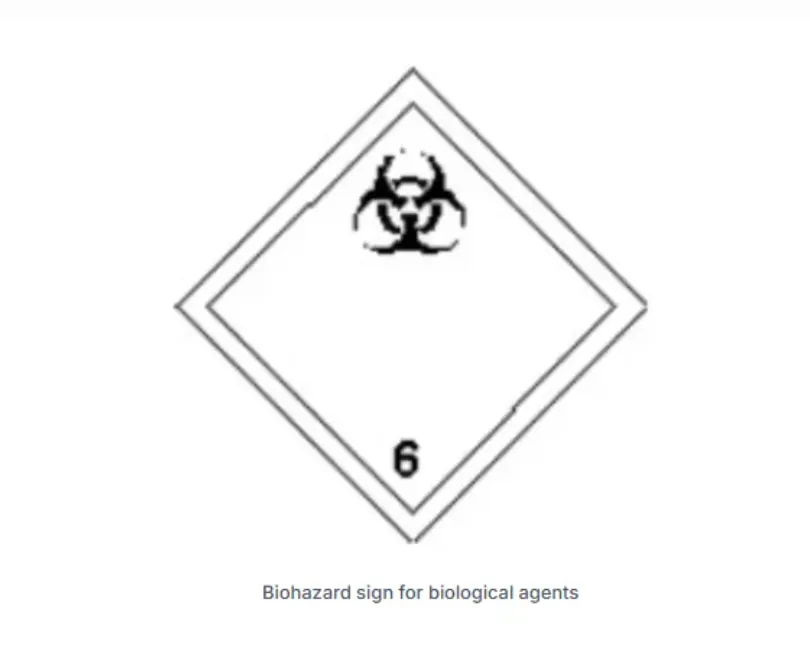
Biohazard sign for biological agents
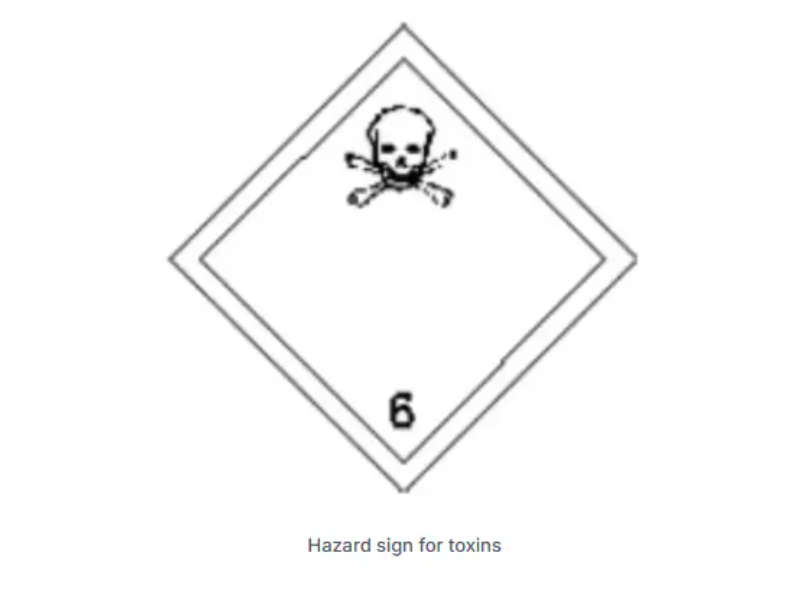
Hazard sign for toxins
C. Packaging Requirements
Biological agents
Must be placed in a primary receptacle that:
Remains upright at all times.
Is watertight and leak-proof.
Is wrapped in absorbent material to -
Prevent breakage.
Absorb all fluids in case of breakage.
If multiple primary receptacles are packed in one secondary receptacle:
Each must be individually wrapped or separated.
All contents must be intended for the same facility.
The primary receptacle must be placed inside a secondary receptacle, which is then packed in a rigid watertight outer container.
Toxins
Must be transported in a package that remains upright at all times.
The package must:
Be watertight and leak-proof (for liquid contents).
Be strong enough to withstand impacts during transportation, loading or unloading.
International Transportation
International transportation of biological agents and toxins are regulated by the International Air Transport Association (IATA). The IATA Dangerous Goods Regulations, based on the International Civil Aviation Organization Technical Instructions, provide procedures for safely transporting hazardous substances by air.
View the IATA Guidance Document (opens in new tab).
Frequently Asked Questions
Find answers to commonly asked questions on the FAQ page.