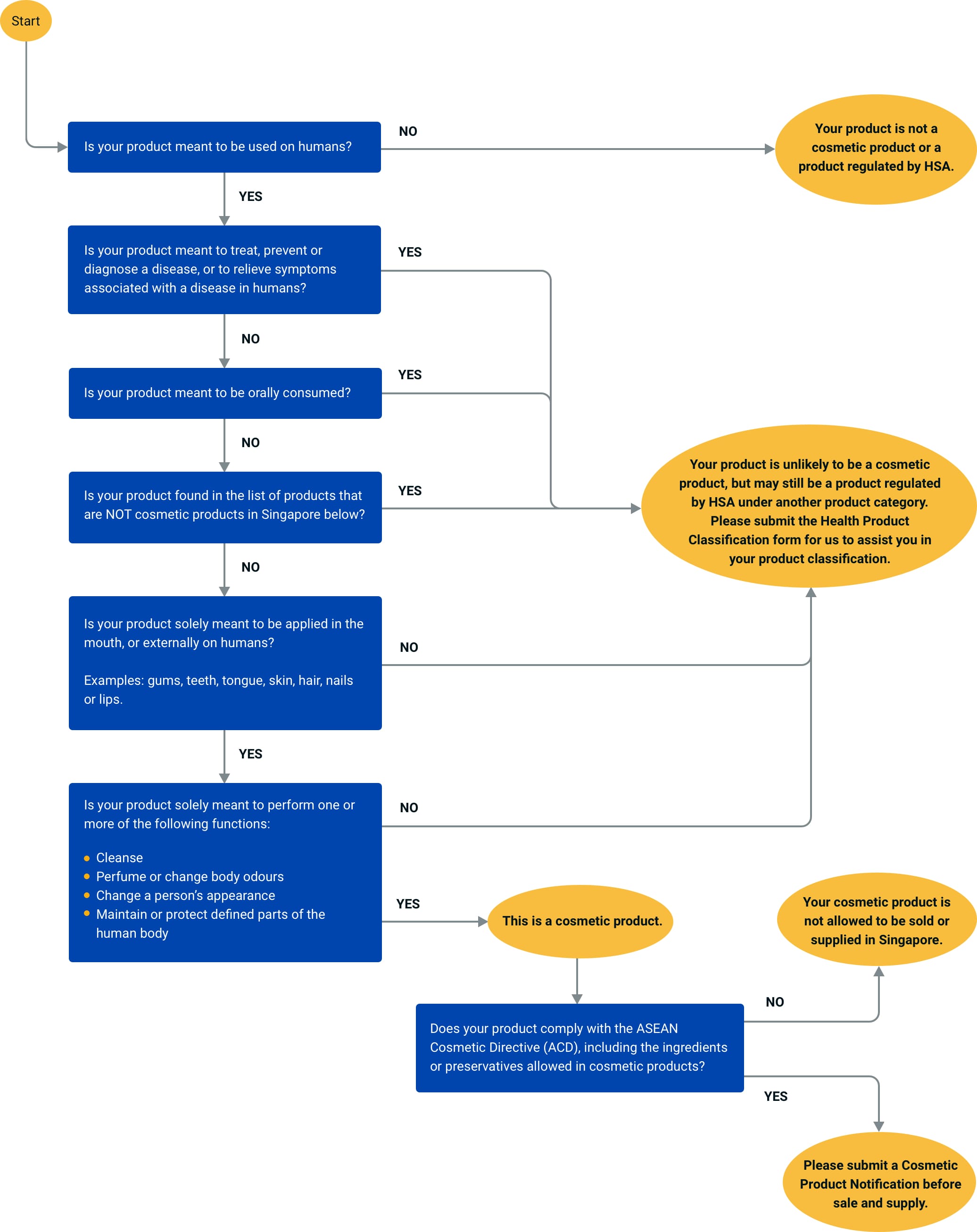
Cosmetic product classification guide
Find out if your product is a cosmetic product.
Last updated on 13 March 2026
Products that may be considered as cosmetic products
Below is a non-exhaustive illustrative list of products that could be considered as cosmetic products:
Creams, emulsions, lotions, gels and oils for the skin (hands, face, feet, etc)
Facial masks; e.g. whitening facial mask, moisturizing facial mask
Tinted bases (liquids, pastes, powders)
Make-up powders, after-bath powders, hygiene powders etc
Toilet soaps, deodorant soaps, etc
Perfumes, toilet waters and eau de Cologne
Bath and shower preparations (salts, foams, oils, gels, etc)
Depilatories
Deodorants and anti-perspirants
Hair care products
Hair tints and bleaches
Products for waving, straightening or fixing
Setting products
Cleansing products (lotions, powders, shampoos)
Conditioning products (lotions, creams, oils)
Hairdressing products (lotions, lacquers, brilliantines)
Shaving products (creams, foams, lotions, etc)
Products for making-up and removing make-up from the face and the eyes
Products intended for the application to the lips and around the eyes
Products for care of the teeth and the mouth
Products for nail care and make-up (manicure and pedicure products)
Products for external intimate hygiene
Sunbathing products
Products for tanning without sun
Skin whitening products
Anti-wrinkle products
Baby/Facial Wipes
Products that are not cosmetic products
The following products are not considered cosmetic products:
Mosquito repellents (refer to the National Environment Agency (opens in new tab) for more information)
Examples of products that are not cosmetic products
Note: The list below is not exhaustive, and merely provides a list of examples of products that have previously been mistaken to be cosmetic products.
Products intended for oral consumption, such as beauty dietary supplements and collagen drinks
Products intended for pharmaceutical or medicinal purposes, such as anti-fungal cream and antiseptic cream
Preparations such as cream and ointments for the treatment of eczema, acne and psoriasis
Injectable substances, such as lip filler injection and tattoo ink
Medical devices, such as bandages, contact lenses, plasters and orthodontic braces
Aesthetic beauty devices and tools, such as hair curlers, electronic hair straighteners, make up brushes, manicure sets, razors and false eye lashes
Insect repellents
Medicated oils and balms, such as ointment for pain relief
Massage oils for improving blood circulation and stress relief
Essential oils for use in diffusers
Lubricants
Sanitary pads
Diapers
Hand sanitisers with antiseptic or anti microbial properties
Toothbrushes
Dental floss
Household detergents, such as dish washing detergent and laundry detergent
Raw materials used to make soaps, such as sodium hydroxide
Temporary tattoos
Products intended only for animals and pets, such as pet shampoo
Cosmetic product classification guide
Use our classification guide to determine whether your product can be considered a cosmetic product in Singapore.
If you are not certain if the product you are dealing with is a cosmetic product, you may submit your classification enquiry using the Health Products Classification Form (opens in new tab).